


Blue Zones and Menopause: Five Pillars for a Supported Transition

Menopause is often framed as a list of independent symptoms to manage: hot flushes, disrupted sleep, mood changes, weight shifts, brain fog. That view is too narrow. The transition affects daily life, long-term health, identity, relationships and confidence.
Blue Zones offer a wider lens. These are regions where people are known for living longer, healthier lives, including Okinawa in Japan, Sardinia in Italy, Ikaria in Greece, the Nicoya Peninsula in Costa Rica and the Seventh-day Adventist community in Loma Linda, California. They are not menopause “cures”, and they were not designed as clinical menopause programmes. Still, the patterns seen across these communities line up closely with lifestyle factors that can support women through midlife and beyond.
The five pillars of menopause, nutrition, exercise, sleep, relaxation and purpose, give a useful way to translate Blue Zone habits into daily choices.
This article is for information only and does not replace personalised medical advice. Anyone with severe symptoms, early menopause, complex health needs or questions about hormone therapy should speak with a qualified healthcare professional.
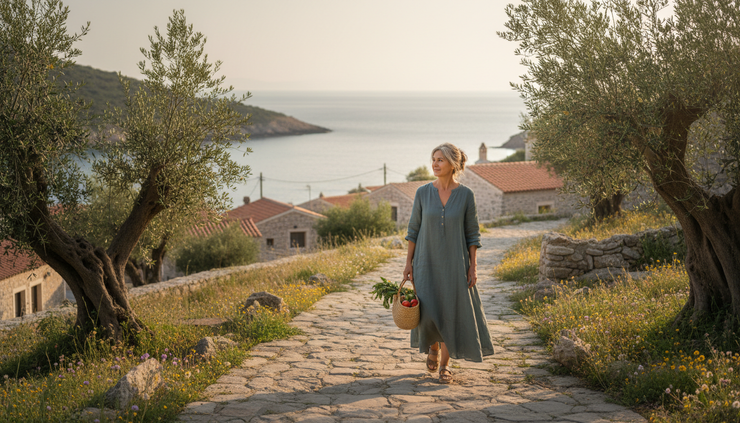
What Blue Zones can teach us about menopause
Blue Zones share several habits that appear simple at first glance. People move naturally throughout the day. Meals tend to be built around plants, beans, whole grains and seasonal produce. Older adults remain socially connected. Rest is treated as normal rather than lazy. Purpose is woven into family, faith, work, volunteering or community roles.
These habits matter during menopause because the transition can increase pressure on the body. Oestrogen levels fluctuate and then decline, which may affect temperature control, sleep, mood, muscle mass, bone health, cholesterol patterns and fat distribution. Lifestyle cannot remove every symptom, but it can create a steadier base.
The key lesson from Blue Zones is not to copy a specific island diet or rural lifestyle. The useful part is the pattern:
Daily movement is built into life.
Food is mostly simple and plant-rich.
Social ties are strong.
Rest and reflection have a place.
Older age has meaning and status.
Menopause support often focuses on what to add: supplements, tracking apps, special products or strict plans. Each can play a useful part as we adapt to our changing bodies, however Blue Zones point to something quieter: shape the day so health-promoting behaviours become normal.
Lifestyle and Hormonal Rebalancing
Lifestyle can be categorised into five distinct "pillars" that help provide clarity and guidance as we navigate hormonal rebalancing. It's important to emphasise that peri-menopause is the transitional phase leading up to menopause, during which many symptoms become apparent. Menopause is officially defined as the absence of menstruation for one year, and this stage continues for the remainder of a person's life.
The five pillars have been broken down below:
1: Diet and nutrition
Blue Zone eating patterns vary, but they share clear similarities. Meals are often based on plants, especially beans, vegetables, fruit, whole grains, nuts, seeds and olive oil in Mediterranean regions. Meat is usually eaten less often than in many Western diets. Ultra-processed foods play a smaller role in traditional diets.
For menopause, this matters for several reasons. Muscle and bone health need more attention in midlife. Blood sugar swings can affect energy and mood. Cholesterol and heart health become more important after menopause. Digestion may also change.
A Blue Zone-inspired menopause plate does not require rare ingredients. It can be built from familiar UK staples:
Blue Zone pattern | Menopause-friendly example |
Beans and pulses most days | Lentil soup, chickpea stew, beans on wholegrain toast |
Vegetables at most meals | Roasted greens, salad, vegetable curry, stir-fried cabbage |
Whole grains | Oats, barley, brown rice, wholegrain bread |
Healthy fats | Olive oil, walnuts, seeds, avocado |
Fermented or traditional foods | Live yoghurt, kefir, sauerkraut, miso, if tolerated |
Simple meals shared with others | Batch-cooked soup, family-style salads, easy mezze plates |
Protein deserves special attention. Some Blue Zone diets are not high in animal protein, but they often include regular plant protein from beans, lentils and soya foods. During menopause, enough protein helps maintain muscle, especially when paired with strength exercise.
Calcium, vitamin D, omega-3 fats, fibre and phytoestrogen-containing foods such as soya may also be relevant. Needs vary, and supplements are not always necessary. Food first is a sensible base, with testing and professional guidance where needed.
One Blue Zone habit worth copying is eating until comfortably satisfied rather than stuffed. In Okinawa, a traditional phrase encourages stopping before full. The modern version is simple: slow down, pause halfway through a meal and notice whether hunger has softened.
2: Exercise through natural movement
Many people hear “exercise” and think of gym sessions, sports kit and strict schedules. Blue Zones suggest another model. People move because life asks them to move. They walk, garden, climb steps, cook, carry, clean, squat, stretch and spend less time sitting.
That is useful during menopause because consistency matters more than occasional intensity. Natural movement helps with joint comfort, sleep, insulin sensitivity, mood and cardiovascular health. It also lowers the barrier to starting.
Still, menopause brings one extra need that traditional Blue Zone lifestyles often covered naturally: strength. In rural communities, daily tasks can involve lifting, carrying and working on uneven ground. Modern life removes much of that effort. Replacing it matters.
A balanced menopause movement routine can include:
brisk walking or cycling for heart health
strength training two or more times a week
balance work, such as single-leg stands or yoga
mobility for hips, shoulders and spine
short movement breaks during long sitting periods
Strength training does not have to mean heavy gym culture. It can start with sit-to-stands from a chair, wall press-ups, resistance bands, step-ups and carrying shopping evenly. Over time, muscles need enough challenge to adapt.
The Blue Zone similarity is clear: movement is not saved for a workout slot. It is scattered through the day. A ten-minute walk after lunch, stairs instead of a lift and gardening at the weekend all count. Small actions work best when they repeat.

3: Sleep
Sleep disruption is one of the most common menopause complaints that I encounter through my clients' experience. Night sweats, anxiety, joint aches, bladder changes and early waking can all break rest. Poor sleep then affects hunger, mood, concentration and motivation to move.
Blue Zone communities do not offer a single sleep routine, but they do show a shared respect for rhythm. Daily outdoor light, physical activity, regular meals, social connection and periods of rest all help the body understand when to be alert and when to wind down.
In some Mediterranean communities, a slower afternoon pace or short rest is culturally acceptable. In many traditional settings, evenings are less dominated by artificial light and late-night stimulation. These patterns support the body’s internal clock.
Practical changes inspired by this pillar include:
Get outside early in the day, even for 10 minutes.
Keep the bedroom cool, especially if night sweats are an issue.
Reduce alcohol, as it can worsen hot flushes and sleep quality for some people.
Set a consistent wake time rather than only focusing on bedtime.
Create a short evening routine that signals the end of the day.
A Blue Zone approach to sleep is not about perfection. It is about removing friction. If hot flushes wake you at 3 am, a punishing sleep target can add stress. A kinder goal is to build repeatable cues that help the body settle more often.
4: Relaxation
Relaxation is not an optional extra during menopause. Stress can worsen sleep, intensify perception of symptoms and make it harder to choose nourishing food or movement. Many women also reach menopause after decades of carrying mental load for others.
Blue Zones all seem to include ways to downshift. The method differs by culture. It may involve prayer, ancestor remembrance, a nap, time outdoors, shared meals, a slower evening or simply sitting with friends. The common thread is regular release from pressure.
Relaxation does not need to be silent or spiritual. It only needs to tell the nervous system, “You are safe enough to soften.”
Useful options include:
breathing slowly for a few minutes before bed
stretching after a warm shower
sitting outside with tea and no phone
singing or meditation
walking without tracking pace or steps
sharing a meal without rushing
keeping one evening a week free from obligations
holistic treatments to calm the nervous system
This pillar can be the hardest for people who are used to being reliable, busy and available. Yet it may unlock the other four. Better relaxation can improve sleep. Better sleep can make exercise more likely. Exercise can improve mood. A calmer mood can make food choices easier.
5: Purpose
Purpose is a strong theme in Blue Zone research. In Okinawa, the idea of ikigai is often described as a reason to get up in the morning. In Nicoya, a similar concept is sometimes referred to as plan de vida, or life plan. These phrases come from specific cultures, but the wider point is universal.
Purpose protects against the feeling that midlife is about loss. Menopause can coincide with caring responsibilities, career shifts, changing relationships, children leaving home, ageing parents or a new sense of personal limits. For some, it brings relief and clarity. For others, it raises hard questions about identity.
Purpose does not need to be grand. It may look like:
tending a garden
mentoring a younger colleague
caring for grandchildren without losing personal boundaries
learning a skill
volunteering locally
returning to creative work
protecting time for friendships, faith or nature
The Blue Zone lesson is that people tend to age better when they still feel needed and connected. During menopause, this can be powerful. A sense of purpose can support mood, reduce isolation and make healthy habits feel worthwhile.
Purpose is not a productivity target. It is a reason to stay engaged with life.
One useful exercise is to ask, “What gives me energy, even when life is demanding?” The answer may reveal where to place more attention.

The similarities that matter most
The strongest Blue Zone lessons are not complex. They are repeatable. Across very different cultures, the same broad patterns appear again and again.
Food is mostly whole and plant-rich
Blue Zone diets are not identical, but they rely on foods close to their natural state. Beans, vegetables, grains, herbs and healthy fats appear often. For menopause, this supports fibre intake, heart health and steadier energy.
A practical shift is to add before subtracting. Add beans to soup. Add vegetables to breakfast. Add nuts or seeds to yoghurt. Add olive oil and herbs to make simple food satisfying.
Movement is part of the environment
Blue Zone communities often make movement normal because of terrain, transport, gardening and daily tasks. Modern life often designs movement out.
A practical shift is to place movement where it is hard to avoid. Keep walking shoes by the door. Put resistance bands near the kettle. Walk for short local errands. Stand up during phone calls.
Rest is socially accepted
Rest in Blue Zones is not always treated as laziness. Slower meals, naps or evening connection all create breaks in the stress cycle.
A practical shift is to schedule recovery before exhaustion forces it. Ten minutes daily is more realistic than waiting for a free weekend.
Connection protects health
Shared meals, family ties, community groups and neighbourly support feature strongly in Blue Zone communities. Menopause can feel isolating when symptoms are private or dismissed.
A practical shift is to build honest connection. That may mean walking with a friend, joining a class, speaking openly with a partner or finding a menopause-informed healthcare practitioner.
Older women have visible roles
In many long-lived communities, older adults remain part of daily life. They cook, advise, care, teach and participate. Menopause can be reframed as a transition into a new phase of authority, not a disappearance.
A practical shift is to protect roles that bring dignity and joy, while letting go of duties that only drain.

How to apply the five pillars without overhauling your life
The biggest mistake is trying to change everything at once. Blue Zone lifestyles work partly because they are embedded and repeated over years. A menopause plan should feel the same: steady, realistic and personal.
Start with one pillar that feels most urgent.
If sleep is poor, build the evening routine first. If energy is low, look at breakfast protein and daylight. If mood feels flat, begin with purpose and connection. If stiffness has crept in, add short strength sessions. If stress is constant, choose one daily downshift practice.
A simple weekly plan might look like this:
Cook one batch meal with beans or lentils.
Take three short walks after meals.
Do two 20-minute strength sessions.
Keep alcohol-free nights during the week.
Set a regular wake time.
Plan one meaningful social connection.
Protect one pocket of quiet time.
These are not dramatic changes, but they are the kind that shape health over time. They also leave room for medical support. Hormone therapy, non-hormonal medicines, pelvic health care, talking therapy and treatment for sleep disorders can all have a place. Lifestyle and healthcare should work together, not compete. Remember, too, that some menopause symptoms present similarly to serious health complaints, so it's always best to check with your GP if you have a medical concern.
The most useful next step is small enough to repeat tomorrow. Choose one pillar, make one change and let it become part of the day. A healthier transition is rarely built through extremes. It is built through ordinary habits that keep showing up.
To find out more about supporting peri-menopause and menopause with reflexology, get in touch by clicking the link below.
Bibliography
National Institute for Health and Care Excellence (NICE) (2026). Menopause: identification and management (NG23). NICE.
British Menopause Society (2023). Menopause: Nutrition and Weight Gain — Tool for Clinicians. British Menopause Society.
British Menopause Society (2025). Managing Sleep Disturbance During the Menopause Transition — Tool for Clinicians. British Menopause Society.
Poulain, M., Pes, G.M. et al. (2004). ‘Identification of a geographic area characterized by extreme longevity in the Sardinia island: the AKEA study.’ Experimental Gerontology, 39(9), pp. 1423–1429.
Willcox, B.J., Willcox, D.C. et al. (2007). ‘Caloric restriction, the traditional Okinawan diet, and healthy aging: the diet of the world’s longest-lived people and its potential impact on morbidity and life span.’ Annals of the New York Academy of Sciences, 1114, pp. 434–455.
Legrand, R. et al. (2021). ‘Description of Lifestyle, Including Social Life, Diet and Physical Activity, of People ≥90 years Living in Ikaria, a Longevity Blue Zone.’ International Journal of Environmental Research and Public Health, 18(12), 6602.
Blue Zones, an Analysis of Existing Evidence through a Scoping Review (2025). Aging and Disease.


Comments